When the product video is playing on a glowing, see-through display at a store, it’s difficult to ignore. This is what a transparent LED screen offers, and it’s why companies within the retail, hospitality, and events sectors are increasingly turning toward it.
The ability and the willingness to own a clear LED screen and use it effectively are two different things. If the installation, content, and placement are incorrect, you lose the impact. If you get it right, you will have one of the most eye-catching display tools ever in the history of digital signage.
This guide walks you through everything you need to use transparent LED screens the right way — from selecting the right product to measuring the return on your investment.
What Is a Transparent LED Screen?
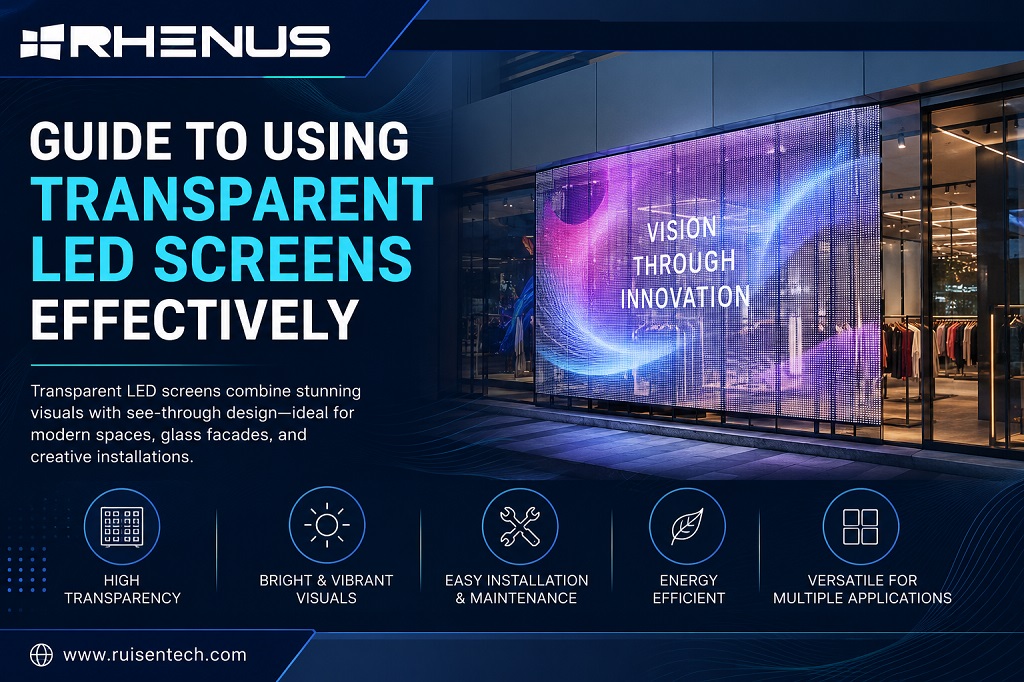
The transparent LED screen is a screen made of a transparent material that can show dynamic video content while allowing light to pass through. The screens are not transparent like traditional LED displays; instead, they are made with a mesh-like configuration of LED modules, leaving gaps between them. The result? You can see the content on screen and through the screen at the same time.
The transparent design of these LED screens is ideal for glass facades, store windows, showrooms, and anywhere visibility is desired from both sides of the screen.
Typically, the transparency level varies from 50% up to 90% given the pixel pitch and panel type. When the transparency percentage is higher, more light is able to pass through, which is perfect for store windows. But when the transparency rate is lower, the LED grouping becomes thicker, which – together with increased brightness and pixel density – can cause deeper contrast. So, panels with a low level of transparency are more appropriate for indoor areas with a controlled environment where a certain degree of light blocking is permissible.
Top Industries Using Transparent LED Displays
LED technology for transparency is no longer a niche technology. It is increasingly being adopted as a preferred method of visual communication in multiple industries. It’s where it really counts:
| Use Case | Transparency Level | Best For |
| Retail storefront windows | 70–90% | Product launches, promotions |
| Corporate lobbies | 60–75% | Brand storytelling, wayfinding |
| Stage & event backdrops | 50–70% | Live performances, concerts |
| Airport & transit hubs | 70–85% | Passenger info, advertising |
| Museum & showrooms | 60–80% | Immersive product display |
The greatest advantage of the transparent LED display is its versatility. From fashion brands to hotels and event production companies, there’s a use case for everyone.
How to Choose the Right Transparent LED Screen
You must ensure that you correlate the screen specifications with your surroundings before installing. These are the things you should consider:
1. Pixel Pitch
Resolution and transparency are determined by the pixel pitch. A larger pitch (e.g., P10 or P15) gives higher transparency but lower image detail. A smaller pitch (P3.9 or P5.9) provides sharper content but is less transparent. Choose based on viewing distance and visibility needs.
2. Brightness
Outdoor usage needs super brightness, namely 5,000-8,000 nits. 2,000-4,000 nits is a the general starting point for indoor usage. Though the right level depends on the ambient light in your specific space, a sun-facing atrium needs way more brightness than a north-facing lobby. Before you settle on your brightness specification, measure the ambient light in lux at the site of the installation. Don’t skimp on brightness for storefront windows since the displays are going to be wilted by sunlight.
3. Transparency Rate
Natural light and visibility through glass are key elements. You should So aim for 70% or more if natural light is important and visibility through the glass is also desirable. If the display is located in an indoor environment where some light reduction is permissible, transparency of 50-65% will be appropriate.
4. Size and Modular Flexibility
The majority of the transparent LED panels are modular and can be used to cover large areas without gaps. Measure the glass area precisely and make sure the panels will fit together. Ask for custom sizing if needed.
5. Installation Method
Some LED glass panels are magnetic and/or clip onto the glass. Others require a structural frame. The chosen method affects installation costs, maintenance accessibility, and overall appearance. Have a certified installer inspect the mounting surface before installation.
Best Practices for Transparent LED Screen Content
Even the best hardware underperforms with poor content. Here are the content rules that work:
- Use high-contrast visuals — Bright foreground elements in colors such as white, yellow, or cyan stand out effectively against dark or black backgrounds on a transparent display.
- Use dark or black backgrounds — Transparent screens are ideal if your content has dark or pure black backgrounds, as this creates an invisible background and allows visuals to stand out.
- Don’t overload with too much text — viewers have seconds to absorb your message. Write in large fonts and short sentences, and use strong visuals.
- Match content to ambient light — play brighter and more vibrant content during the day. Content that is softer and slower will be effective during the night.
- Loop content strategically — a 10–30 second loop with smooth transitions is ideal for retail windows. For trade shows or lobbies, the ideal content length is longer, because viewers are in place to watch.
- Content scheduling by time of day — most transparent LED systems offer content scheduling. Utilize it to promote during busy times and to tell stories about your brand during down hours.
Installation Tips for Long-Term Performance
Installation is not only about appearance; it’s about longevity and maintenance costs. Here are some tips to keep in mind:
Ventilation and Heat Management
Transparent LED screens generate heat. Ensure sufficient airflow is provided behind the panels, particularly where installed in a storefront environment. Inadequate ventilation can significantly reduce the LED lifespan.
Cable Management
Cables and wires are a major distraction on a glass LED screen. Plan for hidden cables when installing; don’t plan after installing. Use the building structure or mounting frame to hide power and data lines.
Weatherproofing for Outdoor Use
If transparent LED panels are installed behind glass facades, the glass acts as the main weather barrier. Then again, if the panels are exposed directly to outdoor conditions, for example, open canopy installations or uncovered architectural displays, make sure that the panels are IP-rated. For environments that have direct exposure to rain or dust, IP65 or a higher level of protection is recommended.
Regular Maintenance Schedule
Use a non-abrasive cloth to clean panels that are dry or slightly damp. Schedule visual checks every quarter to spot dead pixels or loose connectors early. Most quality panels allow front-access servicing, which makes maintenance easier without dismantling the frame.
Measuring ROI on Transparent LED Screen Investment
Companies that have invested in digital signage want to see it work. Let’s look at a few ways to see the return on investment in real terms:
- Foot traffic lift — Use heat maps or counters to see if the LED content is attracting more customers into the store.
- Dwell time — are customers stopping to watch your display? The longer the dwell time, the more engaged users will be, and the more likely they are to make a purchase.
- Promo uplift: compare sales of the promoted products during the display period with off-period sales.
- Brand perception — in the corporate and hotel environment, ask the guests what impression the display made on them.
- Energy consumption — transparent LED screens consume a lot less energy than conventional displays of the same size. Monitor energy consumption and incorporate it in the cost of ownership.
The return on investment (ROI) of transparent LED displays is often high in high-traffic areas, such as retail and hospitality, because the display itself is a marketing tool that can be used repeatedly.
Common Mistakes to Avoid
There are common mistakes that many companies make when implementing transparent LED. Here are the ones that cost the most:
- Not considering ambient light levels when choosing your specs — always test brightness at different times of day before settling on specs.
- Using content designed for traditional screens — create content specifically for transparent displays, not repurposed TV ads or posters.
- Avoiding professional installation — DIY installations tend to have alignment problems, cable management issues, and shortened panel lifetimes.
- No content update strategy — a static loop running for months loses its impact. Schedule regular updates of content.
- Purchasing based on price alone — cheap panels with poor transparency uniformity or inferior LEDs will exhibit hot spots and will fail prematurely.
Conclusion
Today, transparent LED display screens are no longer just fancy equipment. When used properly, they can be the most powerful tool in modern visual communication due to their ability to seamlessly integrate architecture and technology and create an experience that is impossible for regular display panels.
There are three key factors to achieve success with transparent LED screens: picking the right equipment, crafting content for transparency, and keeping the system up and running. If all of those factors are accounted for, then your transparent LED screen will become a powerful asset paying for itself for many years to come.
If you are interested in exploring transparent LED display options for your projects, Shenzhen Ruishen Optoelectronics Technology Co., Ltd. offers a wide selection of commercial-quality transparent LED screens along with technical expertise and customization services. Contact Shenzhen Ruishen Optoelectronics Technology Co., Ltd. to discover how our products can benefit your business.
FAQs
What is the typical transparency rate of a transparent LED screen?
The transparency of most transparent LED screens is between 50% and 90%. This rate is determined by the pixel pitch and panel design; the larger the pitch, the more light will pass through.
Can a transparent LED screen be used outdoors?
Yes, there are outdoor-rated transparent LED displays that are available with high brightness and weatherproof. Search for models that have an IP65 rating or higher and a brightness of more than 5,000 nits for direct sunlight conditions.
How long does a transparent LED display last?
The lifespan of a quality transparent LED panel is usually between 50,000 and 100,000 hours. Maintaining proper ventilation, regular cleaning, and not overdriving the brightness will greatly increase lifespan.
What type of content works best on a transparent LED screen?
Graphics with high contrast work best on a dark or black background. The dark areas are invisible, and so the content looks like it’s floating in the air — a characteristic of see-through LED displays!